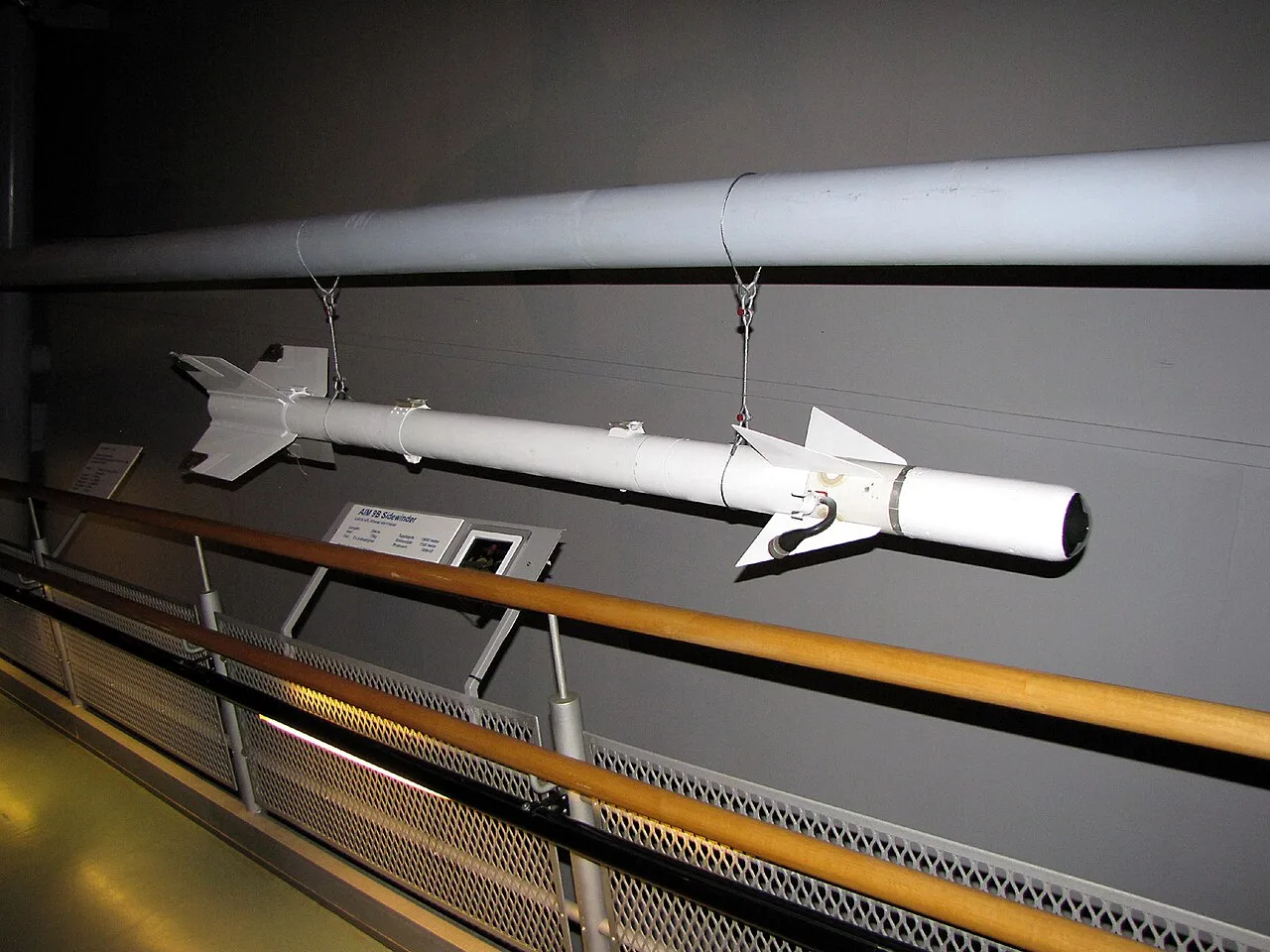
介紹 譯文・待審
AIM-9B 導引飛彈於 1956 年由美國採用(與其原型 AIM-9A 同時,AIM-9A 生產了 240 枚),當時編號為 GAR-8。AIM-9B 是響尾蛇系列第一種量產型號,一直生產到 1962 年,總共為美國海軍與空軍生產了超過 80,000 枚。
AIM-9B 於 1958 年首次在台灣海峽上空實戰。台灣的 F-86 軍刀機積極使用 AIM-9B 對抗數量占優勢的中國 MiG-17 戰鬥機。在這場衝突中發生了一件顯著影響蘇聯導引飛彈發展的事件:一架中國 MiG-17 被 AIM-9B 擊中,但飛彈沒有爆炸,而是卡在機身裡。這架 MiG-17 安全返回機場,技術人員取回了飛彈。後來經與中方協議,這件「戰利品」被交給蘇聯。在徹底研究飛彈的過程中,蘇聯人發現 AIM-9B 有大量技術創新,而且容易大量生產與操作。AIM-9 的簡單,與蘇聯導引飛彈的複雜與短壽命形成對比。蘇聯專家對 AIM-9 進行逆向工程,並於 1960 年以 K-13/R-3C(北約代號「AA-2 Atoll B」)之名服役。K-13 幾乎是美國飛彈的完整複製品,連零件都能與原版互換。
AIM-9B 飛彈對積極機動的目標效果不佳,其紅外線鎖定也很容易被假熱源與太陽的訊號干擾。
English original(DCS 遊戲內百科)
The AIM-9B guided missile was adopted by the United States in 1956 (at the same time as its prototype, the AIM-9A, with 240 units produced) as the GAR-8. The AIM-9B was the first mass produced variant of the Sidewinder family. It remained in production until 1962. In total, more than 80,000 units were produced for the U.S. Navy and Air Force.
The AIM-9B first saw combat over the Taiwan Strait in 1958. Taiwan's F-86 Sabres actively used the AIM-9B missile against superior Chinese MiG-17 fighters. During this conflict, an incident occurred that significantly influenced the development of Soviet guided missiles. One of the Chinese MiG-17s was hit by an AIM-9B, but the missile did not explode, instead becoming lodged in the fuselage. The MiG-17 returned safely to the airfield where the technical staff recovered the missile. Later, by mutual agreement with the Chinese side, the "trophy" was handed over to the Soviet Union. During a thorough study of the missile, it became clear that the AIM-9B had a large number of technological innovations and was easy to mass produce and operate. The simplicity of the AIM-9 contrasted with the complexity and short service life of Soviet guided missiles. The AIM-9 was reverse engineered by Soviet specialists and entered service in 1960 as the K-13/R-3C (NATO designation: "AA-2 Atoll B"). The K-13 was an almost complete copy of the American missile, down to the parts that were compatible with the original.
The AIM-9B missile is ineffective against actively maneuvering targets and its IR lock can be easily interfered by the signatures of false thermal targets and the sun.
搭載機型
DCS 任務編輯器的掛載資料中,可以掛載這款武器的機型(點進去看該機型的教學與掛載配置器):
遊戲內百科列出的搭載平台(ED 原文):
- F-100D Super Sabre
- F-104 Starfighter
- F-86 Sabre
- A-4B/E Skyhawk